
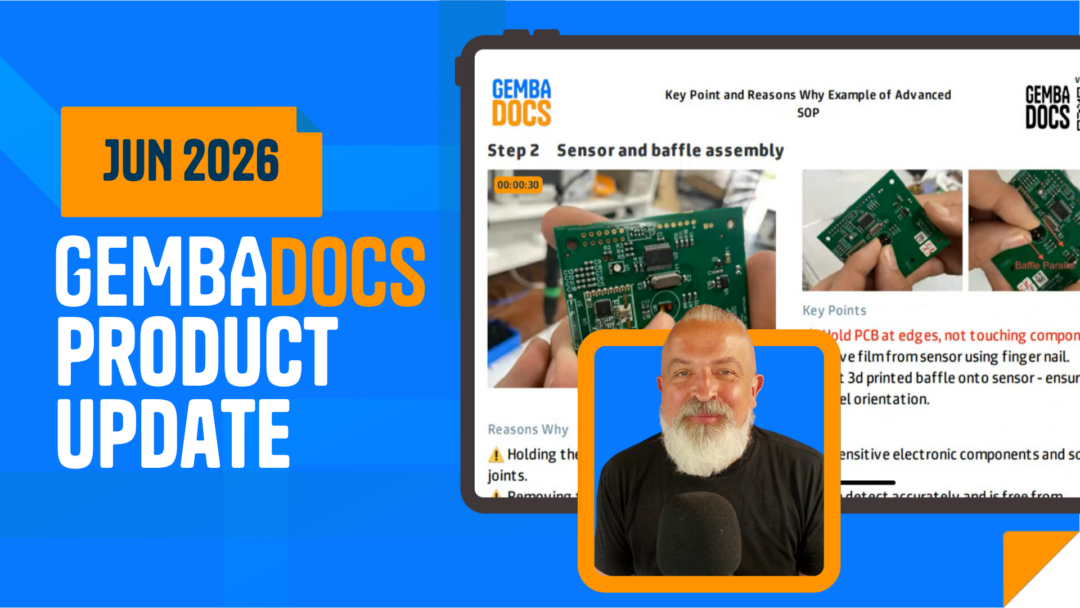
The June update covers seven areas: a new TWI-based SOP format, folder improvements, a more visible feedback loop, better draft collaboration, a fix to approval workflow access, expanded API data, and two new languages.
Tom, CEO of GembaDocs, walks through every change in our latest update video below. Watch it for the full run down, or keep reading for a breakdown of what’s new and what it means for your team.
A New SOP Format Built on TWI
The biggest update this month is a new SOP format based on Training Within Industry (TWI).
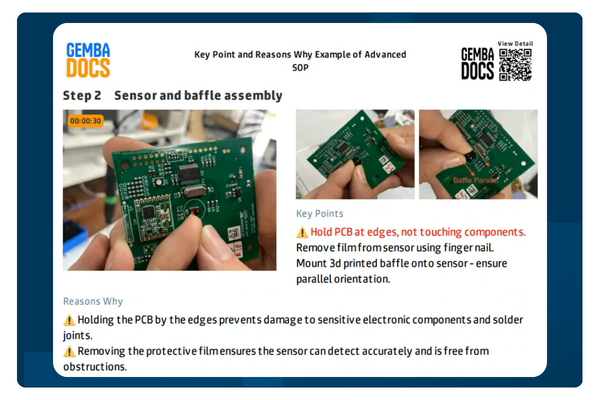
Standard documentation tells operators what to do. TWI goes further. It captures the key points behind each step and, just as importantly, the reasons why those points matter. That combination is what makes training stick and keeps critical know-how from walking out the door when experienced operators move on.
If you’re already running TWI in your facility, this will fit straight into your existing programmes. If you’re not, it’s a practical way to improve how knowledge transfers from your best people to everyone else.
You can enable key points when creating a new document, or convert an existing SOP with a single click. Available on Advanced SOPs.
More Control Over Your Folder Structure
Three improvements to how folders work.
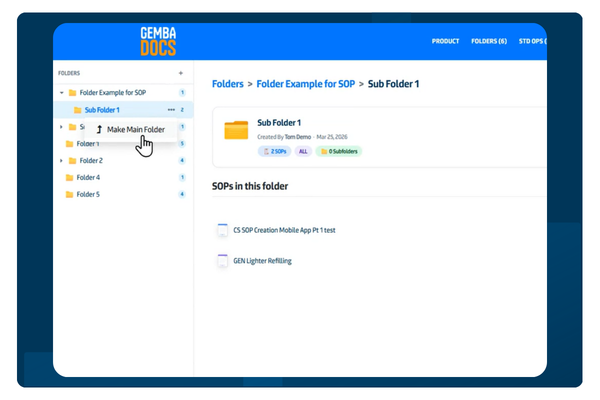
- Reorder folders and documents to match the structure that makes sense for your team.
- Move subfolders up a level within your hierarchy without having to rebuild from scratch.
- See more detailed revision information directly from the folder view.
Small changes, but they add up when you’re managing a large document library across multiple processes. A special thank you to Philip at Whitman Benelux for helping shape some of these improvements.
Feedback QR Codes Are Easier to Add
The feedback QR code feature has been made more visible and easier to use.
Add a QR code to any SOP, and operators on the floor can submit feedback the moment they spot something unclear, out of date, or worth improving. That feedback goes straight to the people responsible for maintaining the document.
It closes the loop between the people doing the work and the people writing the standard. That’s how documentation stays accurate over time.
Collaborate: Better Visibility, Better Input
The Collaborate feature now has improved visibility across the platform.
Collaborate lets multiple people contribute to a document before it goes for approval. That means you can pull in your subject matter experts – the people who actually know the process – before the SOP is finalised, not after.
Better input at the start means fewer revisions later.
Approval Workflow: No More Lost Access
This one fixes a real frustration.
Previously, if a revised SOP was sitting in the approval queue, users could lose access to the document entirely. Now, anyone who needs the SOP during that window will automatically see the latest approved version instead.
It’s a straightforward fix, but it means your teams always have access to the current approved standard, even when a newer version is being reviewed.
Public API: More User Data Available
For teams integrating GembaDocs with other systems, the public API now includes information about users assigned to notifications.
That gives your developers more to work with when building connections between GembaDocs and your wider tools.
Thanks to Mark at UCS Design in Ireland for suggesting this one.
New Languages: Thai and Myanmar
GembaDocs now supports Thai and Myanmar, bringing the platform to more teams in more locations.
If you’re running operations in Southeast Asia, your teams can now use GembaDocs in their own language.