
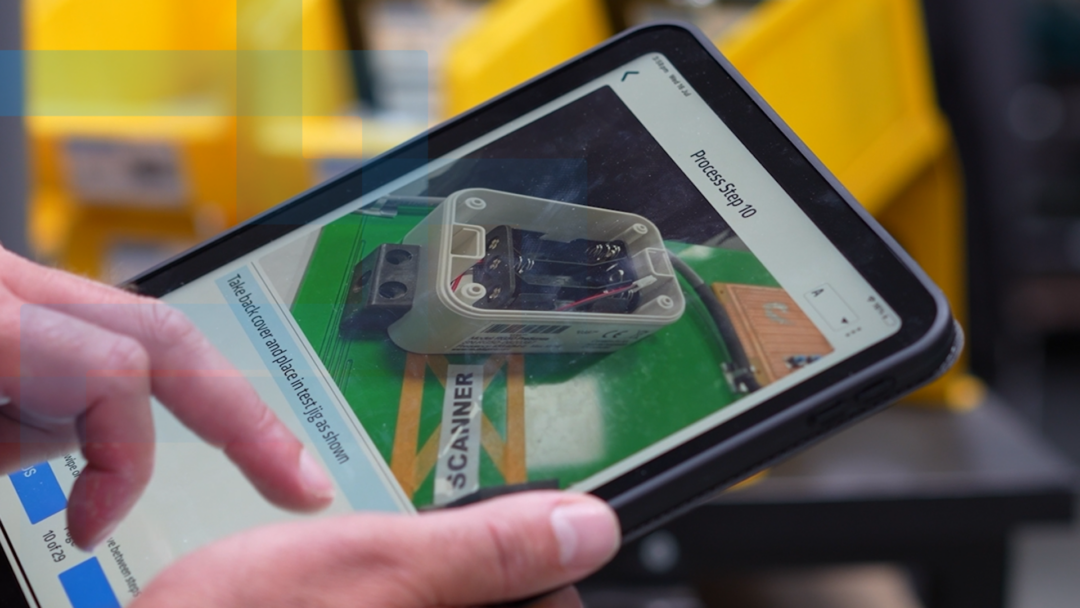
Most manufacturing companies think they have SOPs. Fewer actually use them. If you’ve wondered why your team ignores the laminated procedure on the wall, the answer probably isn’t what you think.
The real reason SOPs don’t stick
It’s not a time problem. It’s not a software problem. And it’s not because your team doesn’t care.
The reason SOPs fail is that leaders struggle to get the team on board – and to be fair to the team, most SOPs they’ve encountered deserve the resistance.
Here’s what usually happens: someone disappears into an office, writes a procedure, prints it out, laminates it, and then wonders why nobody follows it.
That’s not an SOP problem. That’s a respect problem.
Teams don’t resist standards. They resist standards that are done to them, not with them. Most SOPs fail for one or more of these reasons:
- They’re written by people who don’t do the work
- They’re created for audits, not for reality
- They lock in bad processes instead of improving them
- They’re used to police people rather than support them
What an SOP Actually Is
An SOP is not a rulebook. It’s not paperwork. It’s not a control mechanism. An SOP is simply the best known way of doing the work today – written by the people who actually do it.
When that shift happens, the SOP stops being management’s document and starts being a shared agreement. That’s when teams engage with it.
The Five Benefits of Getting SOPs Right
When SOPs are built properly, the results are significant. Here’s what you can expect:
1. Less firefighting
Variation is what creates chaos. When everyone has their own way of doing the job, problems feel random. When there’s a clear standard, problems stand out. Less variation means fewer crises, fewer heroics, and more predictable days.
2. Faster onboarding and better flexibility
If it takes six months for someone to become effective, that’s a process problem – not a people problem. Good SOPs shorten the learning curve, allow people to move between tasks, and reduce dependence on the one person who holds all the knowledge.
3. Quality without constant supervision
When the standard is clear and visual, quality stops depending on who’s on the shift. People don’t have to guess what good looks like. The right outcome becomes obvious.
4. Safety by design
People take shortcuts when the standard isn’t clear – not because they’re careless, but because they’re trying to get the job done. Good SOPs make hazards visible and build safety into the work itself. If a hazard isn’t in the SOP, it will eventually be discovered the hard way.
5. A foundation for continuous improvement
You can’t improve chaos. You can only improve a standard. SOPs create the baseline that makes every improvement a deliberate, measurable change from a known starting point. That’s how learning sticks. That’s how improvement becomes normal.
As Taiichi Ohno, founder of the Toyota Production System, put it: without standards, there can be no improvement.
Masaaki Imai, founder of the Kaizen Institute, made the same point another way: if the process is shifting, any improvement will just be one more variation.
Bad SOPs are worse than no SOPs
This is the uncomfortable part. An SOP that doesn’t reflect reality will be ignored – and rightly so. An SOP written in isolation creates resentment. An SOP that never changes kills improvement.
If your team won’t engage with SOPs, the question isn’t “why won’t they follow them?” The real question is: “why wouldn’t they help create them?”
Engagement follows respect, not the other way around.
The tool problem
Even when leaders want to involve the team, the tools get in the way. Long Word documents, complicated software, and time-consuming processes all make it harder for the people doing the work to take ownership.
That’s the problem GembaDocs was built to solve. It’s designed to make it easy for the people adding value to create and improve SOPs themselves – whether they’re on the shop floor, in the office, or anywhere the real work happens.
SOPs that people respect, use, and improve start with giving them a tool that respects how they work.