
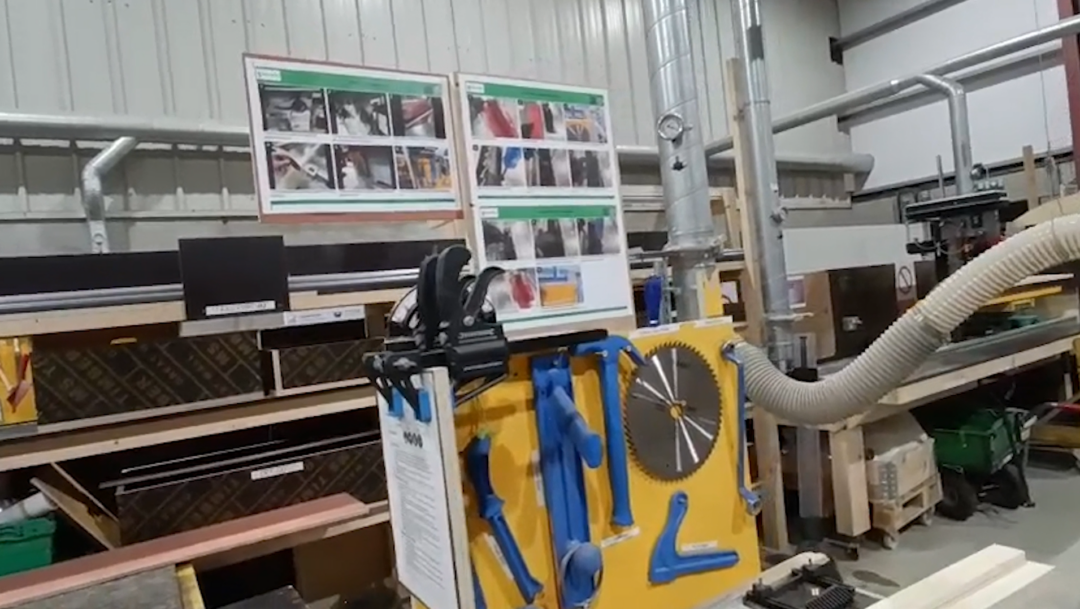
Most teams overthink getting started with operational improvements. They wait for the perfect system, the complete training, the ideal conditions.
Chris Kelly from Taranto didn’t wait. He jumped in and fixed real problems.
What started as a few simple improvements has transformed his workshop into a model of organization and efficiency. No complex systems. No extensive training programs. Just practical solutions that make his work easier, safer, and more consistent.
Here’s what makes his approach brilliant – and why it works.
Takeaway #1: Put Answers Exactly Where Questions Are Asked
What Chris Did: When someone walks into the shop, they face immediate questions: Which lights? Where’s the power? How do I turn on the TV?
Chris created a simple opening procedure SOP positioned right at the door. Switch on lights here. Power is there. TV works like this.
Why This Matters: New starters don’t need to hunt for information or interrupt someone’s work. Colleagues who haven’t opened up in a while don’t need to remember. The answer is exactly where the question would be asked.
Takeaway #2: Use Just Enough Control to Make the Job Simple
What Chris Did: Chris implemented Kanban cards throughout his workshop, but he didn’t apply the same rigor everywhere.
For high-use materials like his main timber stock, he built physical barriers so the pull card can’t be bypassed. The bin label flips to show Kanban status – a genius piece of simplicity that no one told him to do.
For lower-use materials, he uses more relaxed visual controls. He keeps an eye on levels and pulls the card when needed. All the ordering details are still there, making replenishment easy.
Why This Matters: Perfect is the enemy of good. Chris applied the right level of control for each situation. High-use, critical materials get tighter controls. Lower-use items get simpler systems.
Takeaway #3: Visual Beats Text Every Single Time
What Chris Did: Chris’s workshop had manufacturer manuals – thick documents with walls of text.
Instead, he created visual GembaDocs SOPs. Pictures showing exactly where tools are located. Clear diagrams of how blades fit. Visual guides that invite you in and make sense at a glance.
Why This Matters: Who actually reads those thick manufacturer manuals? Be honest.
But a visual SOP? People want to look at it. They understand it immediately. It becomes a baseline for training and a refresher for anyone who hasn’t used the equipment in a while.
Takeaway #4: Standardize What Works Across Similar Operations
What Chris Did: Once Chris created SOPs for one chop saw and they worked well, he didn’t reinvent the wheel. He replicated the principle across all three chop saws in the workshop.
Each has its specific differences documented (like the handles going opposite ways on one machine), but the basic approach is standardized.
Why This Matters: When the answer is always where the question is, you build consistency. Someone who knows how to use one machine can quickly understand another. New team members learn the pattern once and apply it everywhere.
“This is why I love GembaDocs – It’s made my life so much easier,” – Chris
Takeaway #5: Make Improvement Part of the System
What Chris Did: In his final SOP on the extraction system, Chris mentions he’s already planning to update it because he’s improved the bag-changing process.
With GembaDocs, he can make that update easily. The system doesn’t create barriers to improvement – it enables it.
Why This Matters: If updating documentation is hard, people won’t do it. They’ll make improvements in practice, but those improvements will stay in their heads, not in the system.
Chris has created a living system. As he learns better ways, he updates the SOP. The next person benefits. The improvement sticks.
The Real Lean Lesson
Look at the overall organization in Chris’s workshop. This is a concrete factory wood area. It’s a normal, working environment.
But it’s remarkably organized, clean, and functional.
Chris didn’t overthink it. He didn’t wait for permission or perfect conditions. He identified problems, created simple solutions, and made his work life easier.
Simple things, done well. SOPs and Kanban cards that make jobs easier and make work flow.